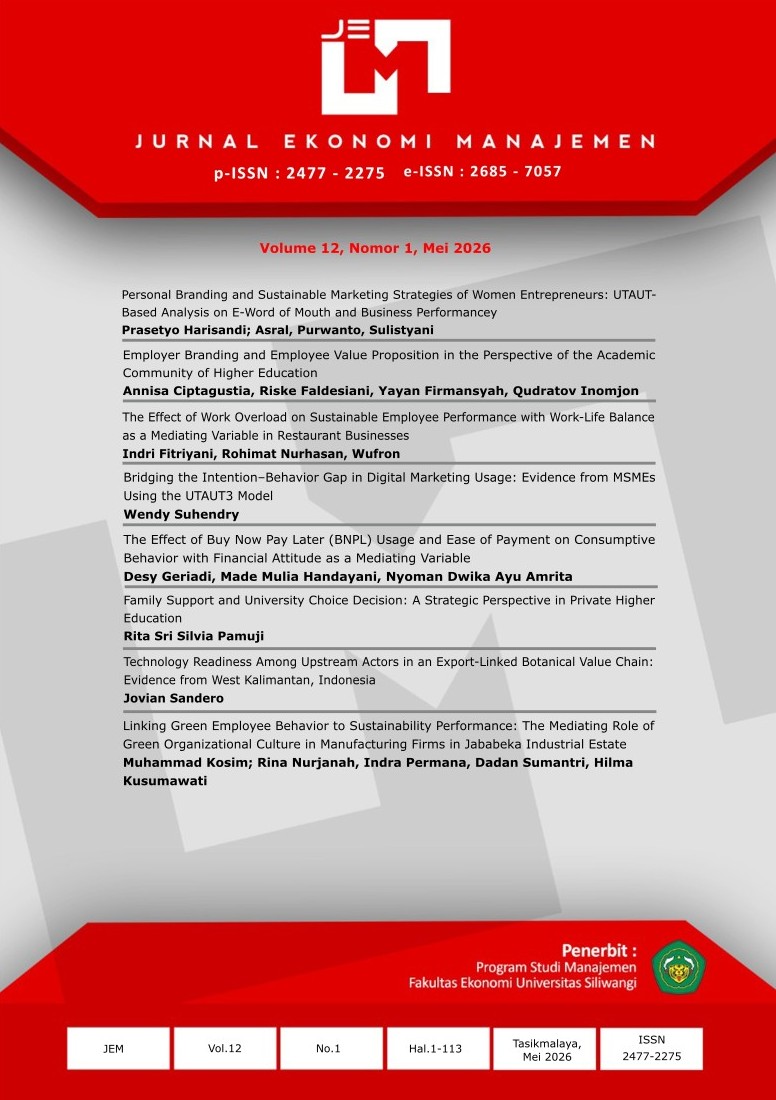
Bridging the Intention–Behavior Gap in Digital Marketing Usage: Evidence from MSMEs Using the UTAUT3 Model
DOI:
https://doi.org/10.37058/jem.v12i1.326Keywords:
digital marketing usage behavior, UTAUT3, behavioral intention, MSMEs, PLS-SEMAbstract
This study aims to analyze the determinants of digital marketing usage among micro, small, and medium enterprises (MSMEs) by applying the Unified Theory of Acceptance and Use of Technology (UTAUT3) framework, with a particular focus on examining the relationship between behavioral intention and actual use behavior. A quantitative research approach was employed using a cross-sectional survey design. Data were collected from 300 MSME actors in Pontianak, Indonesia, through structured questionnaires distributed both online and offline. The data were analyzed using Partial Least Squares Structural Equation Modeling (PLS-SEM) with the assistance of SmartPLS software to evaluate both the measurement and structural models. The results indicate that behavioral intention has a positive and significant effect on use behavior, confirming its central role in driving digital marketing implementation. Furthermore, performance expectancy, effort expectancy, social influence, hedonic motivation, and facilitating conditions significantly influence behavioral intention, while facilitating conditions and habit directly affect use behavior. Most variables influence use behavior indirectly through behavioral intention, highlighting the presence of an intention–behavior gap. The findings contribute to the extension of the UTAUT3 model in the MSME context and provide practical implications for policymakers and practitioners to enhance digital marketing usage behavior through infrastructure support, training, and sustained usage strategies.
Downloads
Published
Issue
Section
Categories
License
Copyright (c) 2026 Jurnal Ekonomi Manajemen

This work is licensed under a Creative Commons Attribution-ShareAlike 4.0 International License.